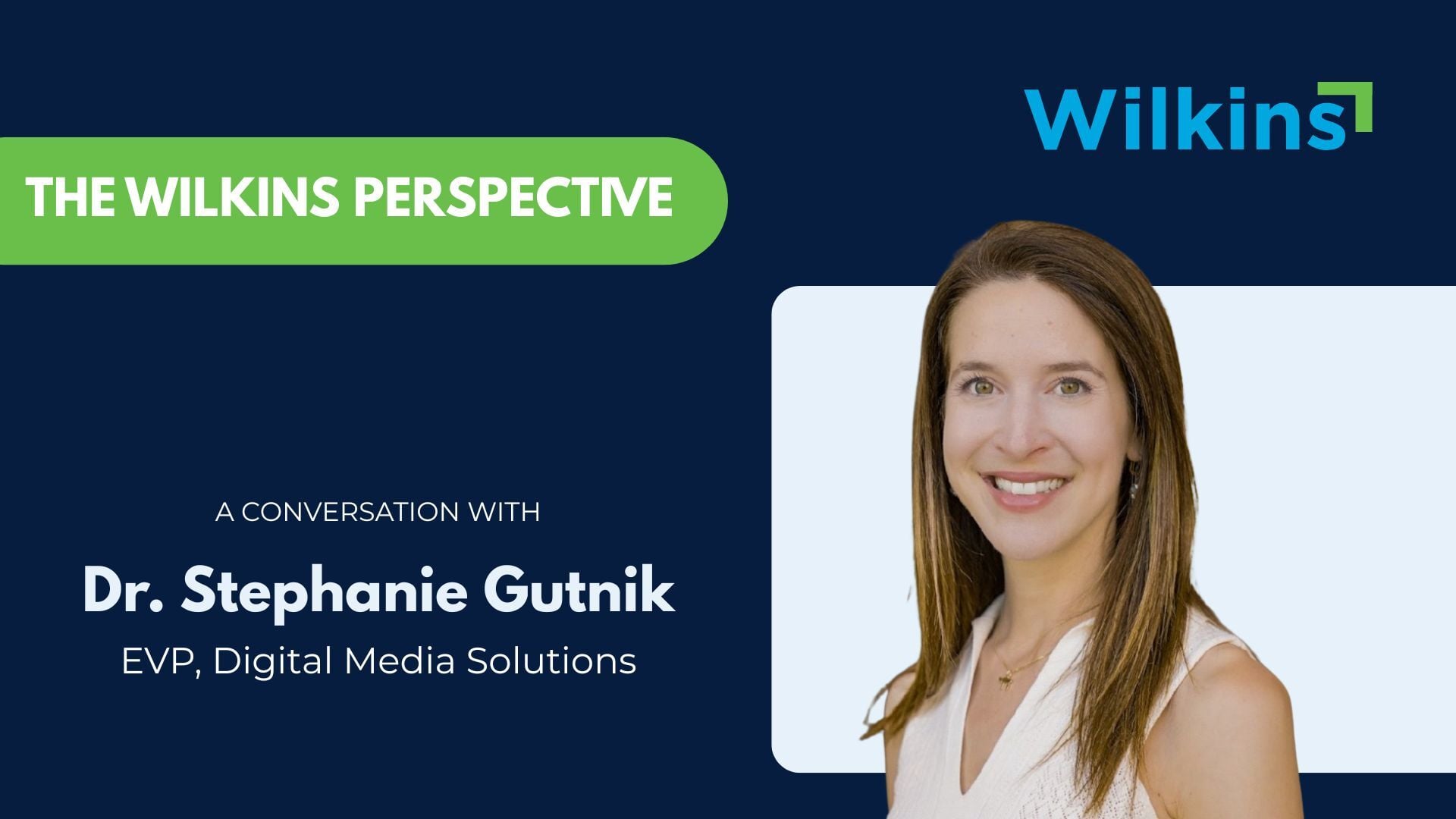
Out‑of‑home advertising and digital media are often discussed separately, but in practice, they perform best together. As measurement capabilities continue to evolve, OOH is increasingly recognized as a measurable, performance‑driving part of modern omnichannel strategies. In this Q&A, Dr. Stephanie Gutnik, EVP of Digital Media Solutions at Wilkins, shares her perspective on how digital and OOH work hand in hand, how brands should think about attribution today, and what it takes to build effective, connected campaigns.
What is your role at Wilkins?
I joined Wilkins as EVP, Digital Media Solutions in the summer of 2025. In this short period of time, I have worked with the DMS team to solidify our publisher and partner relations across all channels, data needs and countries in which Wilkins operates, and help educate our Sales Team on the media opportunities and synergies that we can offer clients. There is a lot of blue sky thinking that we get to do in collaboration with our Sales Team, and we will continue to optimize how we provide excellent output and service to clients.
What are you excited about right now in the digital advertising world?
I am excited that improved measurement capabilities are helping marketers demonstrate performance of "upper funnel" media such as D/OOH and CTV. Mass media provides awesome creative opportunities and moments shared by large groups of people - bringing communities together and driving customer action. Watching and contributing to this shift is personally very rewarding. Having pushed for this progress over the past 15+ years, I am so excited that marketers can invest in brand and measure how it performs across the funnel.
Is there any research that you've come across lately that you think more people should know about?
I recently presented at a client event in Toronto and referred to Canada-specific research about Spotify and Reddit. The incremental audience reach presented by both publishers, and the time consumers spend with Spotify surpassing TikTok and YouTube, are important for marketers to be aware of. In general, the Digital Media Solutions team will keep this type of research top of mind as we look across consumer behaviours and audience types to best plan and activate campaigns.
What is one misconception you see in the world of OOH?
Two years ago, I wrote an article for the Association of National Advertisers addressing the misconception that OOH is expensive. In general, the CPM of OOH is one of the lowest in the advertising landscape. Even at scale, OOH still only occupies about 5% of advertiser budget in the United States. To see optimal effectiveness, it should be more around the 13% mark - so there's room for growth here.
How would you address someone who says OOH isn't measurable?
There are various different methodologies that can be applied to measure OOH to the same level of statistical significance as any other medium. So not only can OOH be measured, but Wilkins will work with partners that provide attribution solutions for the other media in an advertiser's campaign - and do so to the same quality.
What are some ways that brands can extend the reach of their campaign?
When looking at briefs and RFPs, the first questions our team will ask is: what is the goal of this campaign? What is the client's strategy? What is their history with us? Where do they want to go? We ask because we want to set up every campaign for success with a specific goal or set of goals as a north star. The combination of media used to get there will depend on a client's unique variables and business situation. I love challenging the status quo, introducing a medium or format or publisher that hasn't been used before, and enable a test and learn scenario to help broaden audience reach and the horizons for potential results.
Does OOH work well with other types of digital media?
OOH should be seen as the best friend to just about any medium. OOH is an effective driver of both real-world (visiting a physical store, for example) and digital behaviour (say, searching for a brand seen on a billboard). It provides a canvas for brand messaging that is highly trusted by consumers, which correlates with a more positive attitude toward the ad. More on that in my doctoral thesis here.
What does a “best‑in‑class” omnichannel campaign look like today?
As mentioned earlier, this will totally depend on the advertiser's specific goals and situation. That said, marketers know that to reach their desired audiences effectively, they need to be present in a meaningful way across a variety of channels - not just one or two, but tens of formats. For advertisers that are building out what best-in-class means to them, start with snackable efforts to see what happens mixing, for example, sight (OOH, in-game) + sound (streaming audio and podcasting) + motion (CTV). Measure it. Learn. Try it again with a slight iteration.
Let's talk attribution- how can brands measure success and prove ROI back to their teams?
Going back to the question "what is the goal of this campaign?", provide a KPI somewhere throughout the sales funnel and it can be measured; From brand awareness to footfall to digital conversions. While Wilkins does not typically require a minimum spend to run a campaign, attribution efforts do require that the campaign meet a minimum to not only be statistically significant - but to indicate demonstratable results. The programmatic pipes can accept campaigns of all sizes - but proving ROI will often require an investment that becomes further justified by granular data and insights applicable to future campaigns.