
Wondering about out-of-home (OOH) advertising in Washington, D.C?
You’ve come to the right place.
"DC isn't a typical Top 10 market with billboards throughout to reach your desired audience," says Nancy Fisher, Director of Client Partnerships and longtime DC-area resident. "It has limited traditional OOH inventory and is zoned out of many key areas. Yet do not fear, there are a variety of options to reach the coveted politicos, government decision makers, corporate stakeholders, and general market consumers." The first step is to know your campaign’s success will hinge on layered tactics and smart integration.
Market Dynamics
Washington, D.C. is a commuter-heavy city with a professional audience concentrated in government, lobbying, and corporate sectors. The District sits at the heart and is surrounded by the Capital Beltway, a 64-mile highway loop that surrounds the capital and connects influential suburbs of Maryland and Virginia, where many policy and decision-makers live and commute from.
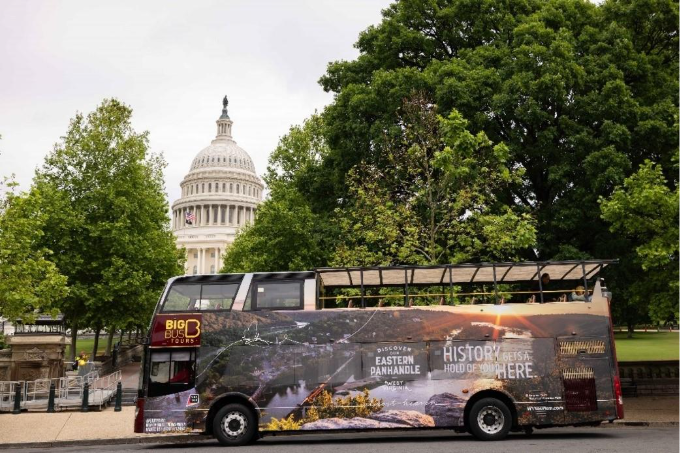
The Beltway is one of the busiest roadways in the country, with I‑495 at the Virginia state line near the American Legion Bridge carrying roughly 229,400 vehicles per day according to the Maryland State Highway Mobility Report. However, billboards are zoned out of Beltway, as well as all major roadways leading into and out of the city. To reach commuters (hundreds of thousands commute to DC daily) and locals, one must use all OOH tools available. An effective OOH buy could layer in exterior bus, shelters, urban panels, rail media, spectaculars/walls and a variety of digital and or static place-based media to drive awareness.
If you are planning an OOH campaign in the DC market, the target demographics and geographic areas are essential details to know before making any buying decisions. For example, household incomes skew high in the close suburbs and neighborhoods of DC, like Georgetown, Dupont Circle, Foggy Bottom, 14Th Street Corridor, and Upper Northwest. From a business standpoint, the K Street corridor (synonymous with influence and decision-making), White House, Executive Office Buildings, L’Enfant Plaza (center of Government office buildings) are essential target areas. However, you can't forget about tech and corporate corridors of Northern VA and Maryland, where Amazon, Marriott, Capital One, Nestlé, Volkswagen, Choice Hotels and many other companies reside.
Like any effective OOH campaign, the media must drive impact and frequency. Issue, advocacy and lucrative corporate campaigns targeting government agencies dominate the DC market, but commercial brands also thrive when purchased to feel authentic and contextually relevant. Understanding the market and consumer behavior is the first step to success.
Strategy
- Launch with Impact: Introduce the brand with large format and high-frequency media that drive real-life awareness across multiple touchpoints.
- Pulse in Target Zones: Sustain visibility with bursts of high-impact media near the Hill and other influential corridors.
- Stay Top of Mind: Own entry/exit hubs and pedestrian-heavy areas to intersect with commuters daily.
Sweet Spot Opportunities
- Union Station: This terminal dominates the market as the #1 Metro station in the area. It has 65,000 trips per weekday and is Amtrak’s second busiest station in the country (Union Station).
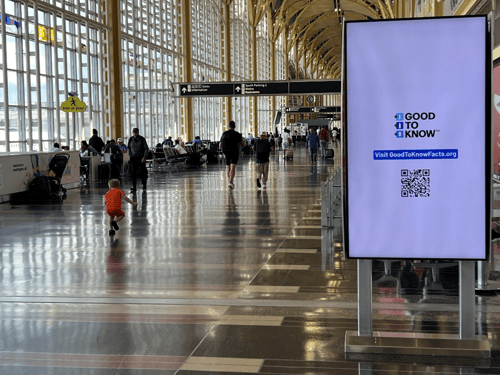
- Reagan National Airport (DCA) & Washington Dulles International Airport (IAD): Together, MWAA airports hit a record 54M passengers in 2024 (+5.8% YoY). DCA alone saw 26.29M travelers (+3.3%), making it a prime gateway for decision-makers flying in for meetings and conferences, while Dulles surged with new international routes and carriers.
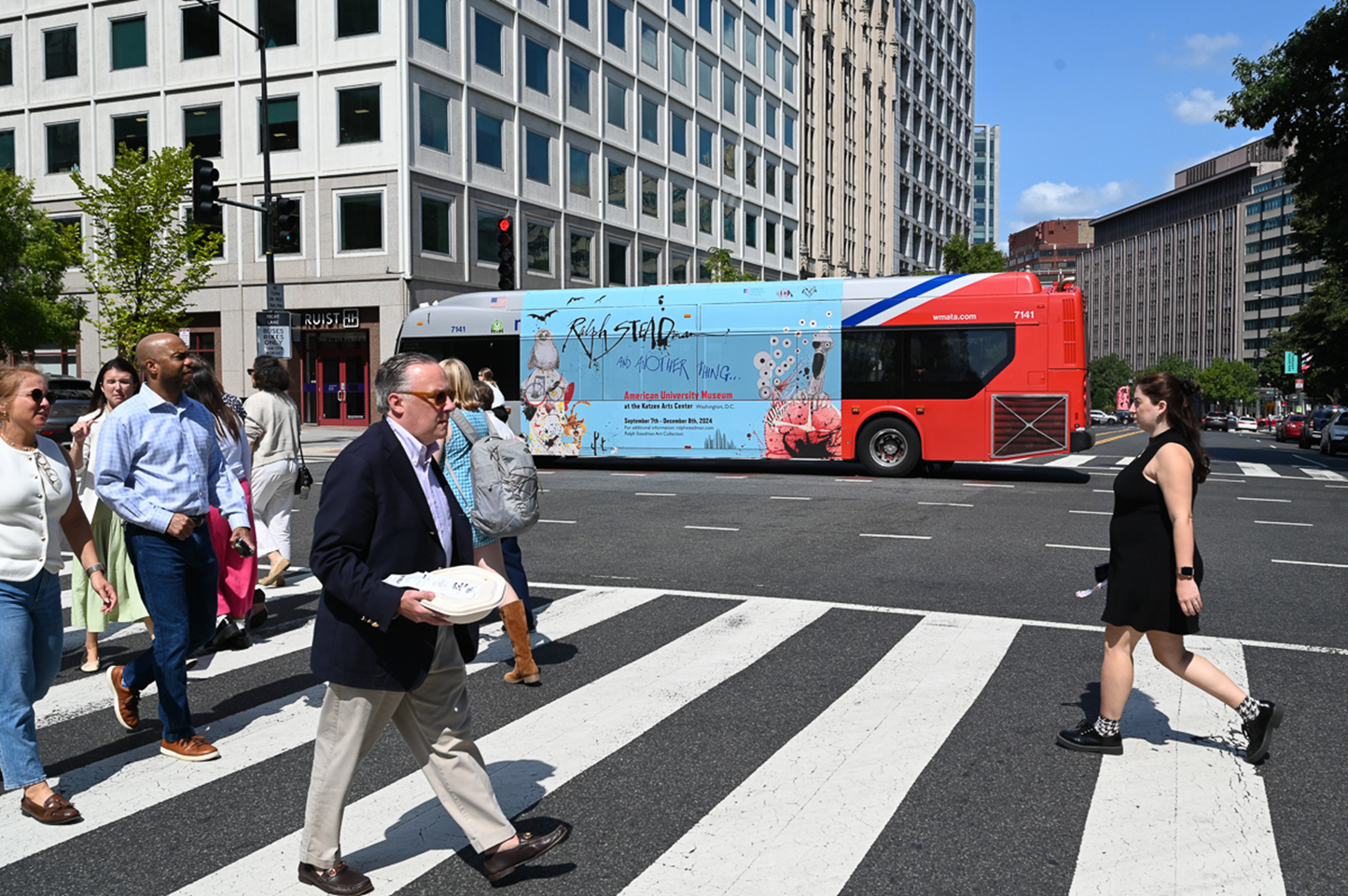
- Bus Shelters & Buses: Heavy pedestrian coverage around the Hill, White House, and K Street—ideal for an “Influential Package.”
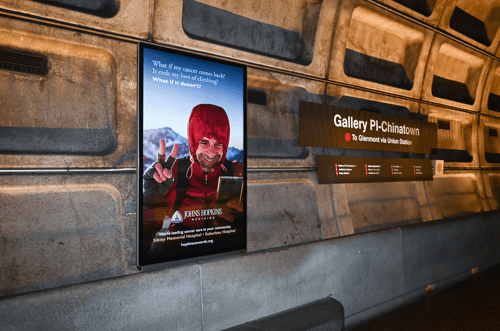
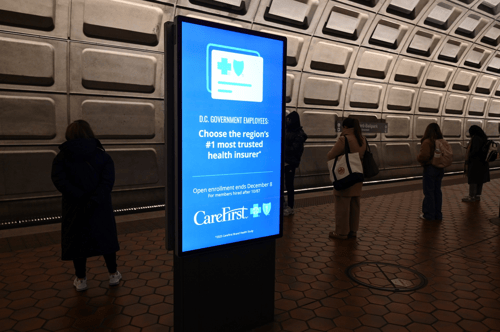
- WMATA/Metro Rail Digital Liveboards & Station Dominations: Reaches rail commuters en route to the Hill, Executive Offices, PR firms, and law firms.
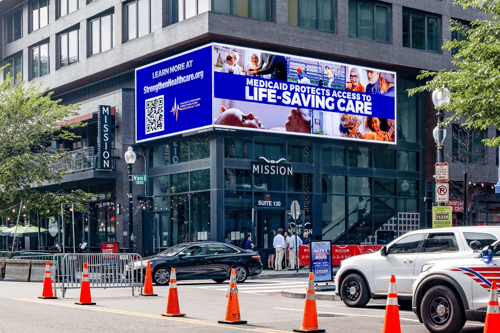
- Walls & Spectaculars: Within a designated area of the downtown business core, near National’s Stadium and on route to/from the Hill to deliver cultural relevance and unavoidable impact.
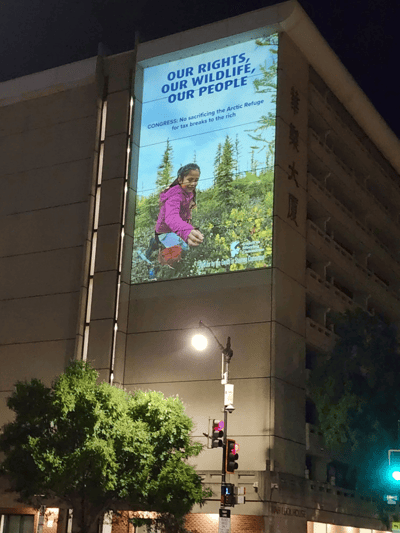
- Experiential: Projections on iconic facades or sidewalk chalk near cultural hubs create buzz and complement static and digital formats.
High-Impact Locations
- Downtown Core: K Street, Farragut Square, and the Convention Center.
- Event Zones: Capital One Arena for sports and concerts.
- Tourist & Commuter Hubs: Union Station and the National Mall.
- Affluent Neighborhoods: Georgetown and Dupont Circle for lifestyle branding.
Maximizing Reach
With fewer billboards than other metros, agencies must layer tactics: murals for impact, DOOH for flexibility, transit for frequency, and experiential for engagement. Prioritize pedestrian-heavy corridors, align activations with major events, and leverage retargeting to measure performance and optimize spend. Washington, D.C. demands a multi-layered OOH strategy. Success comes from knowing the neighborhoods, leveraging transit and DOOH, and integrating experiential elements to amplify reach. For clients entering this market, the goal is clear: build presence where influence lives inside the Beltway.